

The Impact of Digital Transformation in Insurance Industry: Trends, Benefits & Future Outlook
Think insurance is still all paperwork and long wait times? Think again.
The traditional insurance model is under heavy pressure with juggling between paper trails, delayed claim settlements, and one-size-fits-all policies. But nowadays, customers’ expectations are higher and even met by your competitors. They demand personalization, agility, accuracy, and round-the-clock services across devices.
So, how are your competitors winning their hearts?
They have simply implemented digital transformation in insurance, making every step from policy evaluating to making final decision automated, time-saving, and cost-effective.
According to BCG, customers prefer digital channels for collecting information and getting quotes through online platforms.
This blog explores how transforming your insurance business digitally can uplift your business, drive growth, and reduce customer churn rate. We have also mentioned the possibilities of cutting-edge technologies to enhance customer experience and increase retention rate.
Understanding Digital Transformation in Insurance
The core of insurance operations relies on complete digital integration spanning policy administration to underwriting and claims handling, as well as customer interactions and fraud prevention. But it’s much more than simply using modern tools; Digital transformation stands as an organizational and cultural evolution that reshapes the insurance value chain while adapting to modern customer expectations and market strategies in the digital economy.
The shift toward insurance mobile app development has enabled insurers to provide accessible user-friendly contact points which match market demand for real-time service assistance. Predictive analytics in insurance has allowed organizations to better evaluate risks and fight fraud while developing customized solutions which yield more precise results with higher operational efficiency.
Insurers must undergo a critical organizational change that addresses current business needs at an unprecedented level. The digital transition in customer expectations for immediate access, tailored service, and easy digital operations forces insurers who resist change to lose market position. Success relies on more than technology because it necessitates embracing the current situation.
Let’s break down what this transformation typically includes:
- Enterprise insurance companies can improve their operations through automated systems which verify documents and process claims alongside handling customer enrollment.
- Insurance companies use AI and Machine Learning systems to customize their policies while detecting fraudulent activities and enhancing their underwriting processes.
- The implementation of cloud systems enables organizations to store data efficiently while achieving scalability and operational flexibility.
- Data analytics to derive actionable insights from customer behavior and risk patterns.
- The insurance industry now delivers omnichannel service through mobile apps with self-service portals and chatbot technical assistance.
To truly understand the value of digital transformation in insurance, it is important to understand how it is revolutionizing other industries:
Why It’s Crucial to Embrace Digital Transformation Today
The speed of technological progress surpasses historical records of customer demand escalation rates. Delaying digital transformation in insurance means:
- Slower claims handling and poor customer satisfaction
- Outdated, expensive legacy systems drain resources
- Losing ground to nimble InsurTech startups that innovate faster
- Limited insights into risk and customer behaviour due to disconnected systems
In contrast, Insurers who integrates digital transformation create immediate market advantages and maintain lasting success by delivering personalized data-driven services. Today enterprise insurance companies go with insurance software development to manage their day to day insurance tasks with ease.
Key Trends in Insurance Digital Transformation
Before recent developments, insurance processes proceeded slowly, using cumbersome paper documentation alongside intricate operational procedures, but that’s quickly changing. Industry improvements in digital transformation now speed up operations and deliver smarter platforms with enhanced user-friendliness. AI works something like an intelligent virtual assistant that learns to understand your needs better day after day. Here are some of the biggest trends that are reshaping how insurance works today:
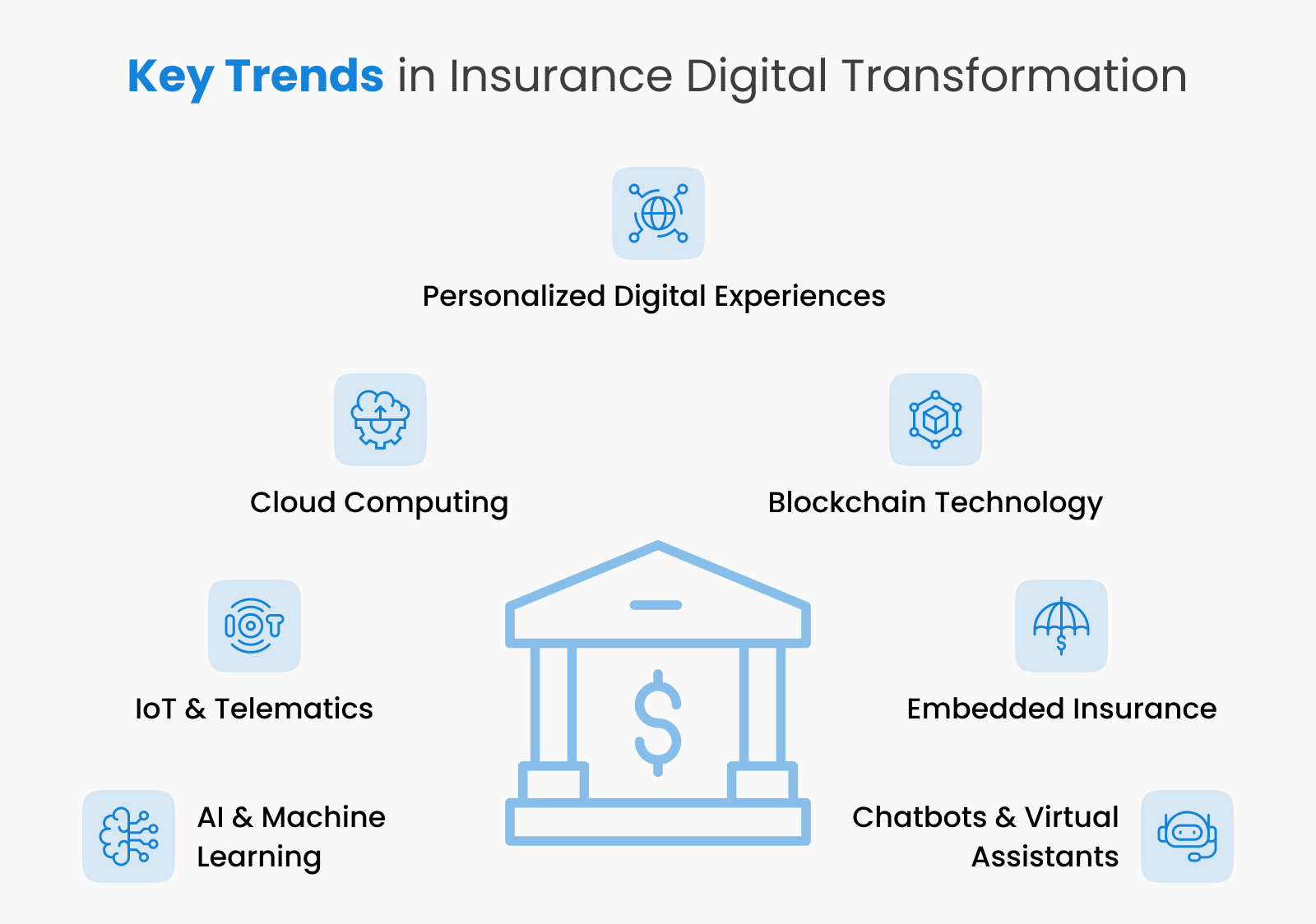
1. AI and Machine Learning
Your insurance provider would begin anticipating your needs without your requests. Machine learning technology together with AI help insurers anticipate their customers’ needs.
- Spot fraud in real-time
- Speed up claims processing through claims management software development
- Offer personalized policy suggestions based on your habits
- Make underwriting smarter and more accurate
Your health insurer provides you with discounts when your smartwatch records that you maintain an active lifestyle.
2. IoT and Telematics
You know those smart devices—like fitness trackers or car sensors? These new technologies now serve a dual purpose beyond benefiting only you. Insurance companies are using the data they collect to:
- Create usage-based insurance (like lower premiums for safe drivers)
- Detect potential risks early
- Encourage healthy and safe behaviors
When your smartwatch demonstrates high physical activity, your health insurance provider might offer reduced rates as a reward. It’s a win-win.
3. Chatbots and Virtual Assistants
Customers now avoid wasting 30 minutes on hold for policy inquiries because of automated support. Chatbots are changing the game by:
- Answering questions instantly
- Helping you update policies
- Guiding you through claims 24/7
These systems remain available at all times and continue to learn new functions daily.
4. Blockchain Technology
You may have heard about blockchain in the world of cryptocurrencies, but it’s doing great things in insurance, too. It helps:
- Secure your data
- Speed up claim settlements
- Add transparency to processes like reinsurance (that’s when insurance companies insure themselves)
Blockchain technology creates digital records that operate as tamper-proof secure systems.
5. Cloud Computing
Through cloud technology, insurance businesses acquire efficient operations and flexible capabilities. With cloud systems, they can:
- Access data from anywhere
- Scale operations easily
- Cut down on costs from outdated software
Their improved insurance system leads to faster service delivery for your needs.
6. Embedded Insurance
Ever booked a flight and got travel insurance with it automatically? That’s embedded insurance. The phenomenon grows steadily while providing users with effortless insurance acquisition at pertinent moments of need.
Separate policy searches become unnecessary because this feature suits those who avoid traditional hunting methods. This shift is a clear result of digitalization in insurance industry made possible with software development that integrates coverage directly into everyday purchases.
7. Personalized Digital Experiences
Everyone wants to feel like a company “gets them,” right? Insurers are now using data to create:
- Tailored coverage options
- Customized communication
- Smart dashboards and self-service tools
So whether you’re a first-time car owner or a small business owner, you get recommendations that actually fit your needs. These experiences are powered by advanced insurance software development and reflect the ongoing digitalization in insurance industry.
Benefits of Digital Transformation for the Insurance Industry
Every stakeholder within the insurance sector experiences numerous positive changes when the industry adopts digital approaches. Key benefits include:
1. Creating Seamless and Personalized Customer Experiences
The digital landscape gives customers better capabilities for both buying insurance and handling their policies and filing claims. Digital tools reduce customer wait times and customize each process to improve their overall experience. This is a key component of digital transformation for insurance where operational efficiency meets intelligent automation.
2. Streamlining Operations with Automation and Smart Workflows
Automation enables the completion of previously time-consuming processes, such as underwriting and claims processing, within a few minutes. The use of predictive analytics in insurance helps providers forecast trends, optimize pricing, and deliver proactive solutions that meet customer needs more accurately.
3. Making Smarter Decisions Through Real-Time Data and Predictive Analytics
The availability of substantial customer and behavior data permits insurers to approximate risk better and create rational premium rates and implement loss prevention measures ahead of time.
4. Driving Product Innovation to Meet Changing Customer Demands
Through digital transformation, insurers can create insurance products based on usage or demand which suit contemporary digital customers better.
5. Reducing Costs by Eliminating Manual Work and Legacy Systems
The transition to digital solutions and cloud-based systems delivers major operational financial benefits through paperless processes and obsolete workforce reductions alongside infrastructure simplification and productivity growth.
6. Adapting Quickly to Market Changes with Scalable Digital Infrastructure
APIs, together with cloud solutions, help insurance providers adapt their service capacities to market needs. It also helps them accelerate feature development to maintain their position in an evolving industry.
Digital transformation plays a crucial role in helping businesses survive in the digital-first era. Have a look at some of the industry’s best examples of digital transformation and how they are helping them ease their day-to-day operations.
Challenges Insurers Face During Digital Transformation
Digital transformation yields numerous advantages, but organizations sometimes struggle with the implementation process. Insurers—especially traditional ones—often face a few bumps along the road:
- Legacy Systems Holding Back Progress
Insurance companies maintain old technological infrastructures which prevent easy modernization and integration with current technical advancements. The upgrade or replacement of these systems entails significant expenses and long-term deployment durations. The critical nature of insurance legacy system transformation allows insurers to create modern core platforms which enhance agility and maintain alignment with evolving digital requirements.
- Data Privacy and Cybersecurity Concerns
Insurers need to process substantial quantities of personal customer data within their digital operational framework. The protection of data information and GDPR and HIPAA compliance standards create significant challenges for organizations who need secure protection against data breaches.
- Cultural Resistance to Change
Digital transformation goes beyond technological frameworks. it’s also about mindset. Digital employees together with senior executives commonly resist workflow changes because they fear job elimination or demonstrate limited technical aptitude with new technological deployments.
- Integration Complexities
When different digital tools and services are integrated together, they can face challenges in connecting due to a lack of design cohesion between systems.
- High Upfront Costs
Many insurers face substantial challenges when investing in new platforms and employee training and data migration before realizing digital savings in the future.
Explore More: Crucial Challenges of Digital Transformation and How to Overcome Them
How Can SPEC INDIA Help You Bring Digital Transformation?
SPEC INDIA delivers technology solutions which lead organizations toward transformational outcomes with components surpassing basic technological structure. Our team creates interactive digital platforms including simple mobile apps with self-service insurance sites which allow your customers to connect better with your solutions.
Here’s how we can support your digital transformation journey:
1. Modernizing Legacy Insurance Systems
Our approach replaces outdated system platforms with contemporary technology to build high-performing secure systems which ensure future readiness of your infrastructure. Our method of legacy application modernization provides improved transition processes accompanied by enhanced integration possibilities and extended operational scalability for insurance operations.
2. Building Customer-Centric Web & Mobile Apps
The team develops straightforward insurance portals and mobile apps which make your service engagement accessible for customers. Our insurance mobile application development work results in smooth user-friendly software that generates long-term customer satisfaction.
3. Leveraging AI, ML & Data Analytics
We help you develop your digital roadmap then identify its alignment with business goals before validating how all your investments drive measurable financial returns. AI and Predictive analytics in insurtech help in identifying new profit opportunities while enabling personalized interactions with customers.
4. Implementing Secure, Scalable Cloud Solutions
SPEC INDIA functions as a digital transformation collaborator, providing organizations with expert guidance to achieve business-focused transformations that meet client requirements.
5. Consulting for Digital Strategy & Innovation
We don’t just implement—we advise. With expert guidance your organization can create an optimized digital strategy while the team maintains goal alignment and verifies all investment decisions’ return on investment.
Wrapping Up
Insurance operations need digital transformation as a fundamental requirement. Insurance companies need to transform their operations because rising customer expectations alongside advancing technology puts them at risk of being displaced by competitors. Digital transformation enables businesses to create better customer experiences and develop stronger enterprises through automation and real-time data analytics and AI-powered simplified claims processing.
Despite potential hurdles your organization will discover efficiency increases and more satisfied customers and improved long-term growth potential making this investment opportunity worthwhile. With the right insurance software development approach, these goals become more achievable than ever.
Together we will navigate you through your digital transformation journey starting at strategic planning and moving towards implementation.
Reach out to our experts to begin building smarter customer-centered insurance solutions.

SPEC INDIA, as your single stop IT partner has been successfully implementing a bouquet of diverse solutions and services all over the globe, proving its mettle as an ISO 9001:2015 certified IT solutions organization. With efficient project management practices, international standards to comply, flexible engagement models and superior infrastructure, SPEC INDIA is a customer’s delight. Our skilled technical resources are apt at putting thoughts in a perspective by offering value-added reads for all.
Table of contents
- Understanding Digital Transformation in Insurance
- Why It’s Crucial to Embrace Digital Transformation Today
- Key Trends in Insurance Digital Transformation
- Benefits of Digital Transformation for the Insurance Industry
- Challenges Insurers Face During Digital Transformation
- How Can SPEC INDIA Help You Bring Digital Transformation?
- Wrapping Up
Delivering Digital Outcomes To Accelerate Growth
Let’s TalkTable of contents
- Understanding Digital Transformation in Insurance
- Why It’s Crucial to Embrace Digital Transformation Today
- Key Trends in Insurance Digital Transformation
- Benefits of Digital Transformation for the Insurance Industry
- Challenges Insurers Face During Digital Transformation
- How Can SPEC INDIA Help You Bring Digital Transformation?
- Wrapping Up
Delivering Digital Outcomes To Accelerate Growth
Let’s Talk
Let’s get in touch!
India
“SPEC House”, Parth Complex, Near Swastik Cross Roads, Navarangpura, Ahmedabad 380009, INDIA.
-
 +91-79-26404031, 32, 33, 34
 -
 lead@spec-india.com
USA
“SPEC Partner”, 350 Grove Street, Bridgewater, NJ 08807, United States.
-
+1 908-450-9862
-
lead@spec-usa.net